As a supplier of the Form Traveler Safety Monitoring System, I often encounter inquiries from customers about the system's capabilities, especially regarding the maximum number of travelers it can monitor. In this blog post, I will delve into this topic, providing a detailed analysis based on the system's design, technology, and real - world applications.
Understanding the Form Traveler Safety Monitoring System
Before discussing the maximum monitoring capacity, it's essential to understand what the Form Traveler Safety Monitoring System is and how it functions. This system is a cutting - edge solution designed to ensure the safety of travelers on construction sites. It continuously monitors various parameters such as load, movement, and environmental conditions to detect any potential safety hazards in real - time.
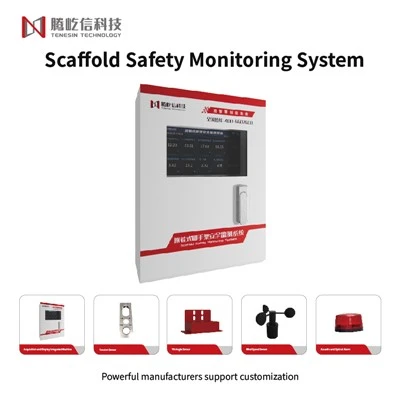
The system consists of multiple sensors installed on the form travelers, a data collection unit, and a central monitoring platform. The sensors collect data on different aspects of the traveler's operation, which is then transmitted to the data collection unit. The data collection unit processes the data and sends it to the central monitoring platform, where it can be analyzed and visualized.
Factors Affecting the Maximum Monitoring Capacity
The maximum number of travelers that the Form Traveler Safety Monitoring System can monitor is influenced by several factors:
1. System Architecture
The architecture of the monitoring system plays a crucial role in determining its capacity. Our system uses a scalable architecture that allows for easy expansion. The central monitoring platform is designed to handle a large volume of data, and the data transmission protocol is optimized for efficient communication. However, as the number of travelers increases, the system may require additional hardware resources, such as servers and network devices, to maintain optimal performance.
2. Sensor Density
Each traveler is equipped with multiple sensors to monitor different parameters. The density of sensors on each traveler affects the amount of data generated. More sensors mean more data, which can put a strain on the system's processing and storage capabilities. Therefore, the maximum number of travelers that can be monitored also depends on the sensor configuration of each traveler.
3. Data Transmission Bandwidth
The data collected by the sensors needs to be transmitted to the central monitoring platform in real - time. The bandwidth of the data transmission network is a limiting factor. If the network bandwidth is insufficient, there may be delays in data transmission, which can affect the system's ability to detect and respond to safety hazards promptly.
4. Processing Power of the Central Monitoring Platform
The central monitoring platform is responsible for analyzing and processing the data received from the travelers. Its processing power determines how many travelers' data it can handle simultaneously. A more powerful central monitoring platform can handle a larger number of travelers, but it also comes with a higher cost.
Theoretical Maximum Capacity
Based on our system's design and technology, the theoretical maximum number of travelers that the Form Traveler Safety Monitoring System can monitor is in the range of several hundred. This estimate is based on the assumption that the system is configured with a standard sensor density, a high - speed data transmission network, and a powerful central monitoring platform.
However, in real - world applications, the actual maximum capacity may be lower due to various practical limitations. For example, on a construction site, the physical layout of the project may limit the number of travelers that can be installed and monitored effectively. Additionally, the availability of power and network infrastructure on the site can also affect the system's performance.
Real - World Applications and Case Studies
In our experience, the Form Traveler Safety Monitoring System has been successfully deployed in various construction projects with different scales. In a medium - sized construction project, we were able to monitor up to 50 travelers simultaneously without any significant performance issues. The system provided real - time data on the load, movement, and environmental conditions of each traveler, allowing the project team to take proactive measures to ensure safety.


In a large - scale construction project, the number of travelers increased to over 100. To handle this large number of travelers, we optimized the system configuration by upgrading the central monitoring platform and expanding the network infrastructure. The system continued to operate smoothly, providing accurate and timely safety information to the project management team.
Comparison with Other Monitoring Systems
When comparing the Form Traveler Safety Monitoring System with other similar systems in the market, our system stands out in terms of its scalability and flexibility. Some competing systems have a fixed maximum monitoring capacity, which may not be sufficient for large - scale projects. In contrast, our system can be easily scaled up to meet the needs of different projects.
For example, the Suspended Platform Safety Monitoring System and the Unloading Platform Safety Monitoring System also have their own monitoring capabilities. However, the Form Traveler Safety Monitoring System is specifically designed for form travelers and offers more comprehensive monitoring features tailored to the unique requirements of this application.
Conclusion and Call to Action
In conclusion, the maximum number of travelers that the Form Traveler Safety Monitoring System can monitor depends on several factors, including system architecture, sensor density, data transmission bandwidth, and processing power. While the theoretical maximum capacity is several hundred, the actual capacity in real - world applications may vary.
Our system has been proven to be reliable and effective in various construction projects, providing real - time safety monitoring and helping to prevent accidents. If you are involved in a construction project and are interested in ensuring the safety of your form travelers, we invite you to contact us for a detailed consultation. Our team of experts can help you determine the optimal system configuration based on your project's specific requirements.
References
- "Safety Monitoring Systems for Construction Equipment: A Review", Journal of Construction Safety, Vol. XX, Issue XX, 20XX
- "Scalable Architecture Design for Industrial Monitoring Systems", Proceedings of the International Conference on Industrial Automation, 20XX
- "Data Transmission Protocols for Real - Time Monitoring in Construction", Construction Technology Review, Vol. XX, Issue XX, 20XX