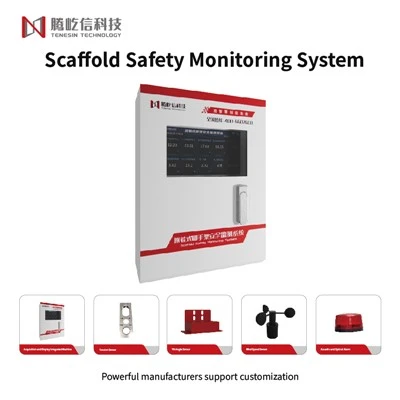
Hey there! As a supplier of crane safety monitoring systems, I'm super stoked to dig into how our systems keep a close eye on a crane's slewing movement. You know, slewing is like the crane's ability to rotate horizontally. It's a crucial part of a crane's operation, and making sure it's done safely is our top priority.
First off, let's talk about the sensors. These little guys are the heart of our crane safety monitoring system. We use a bunch of different sensors to track the slewing movement. One of the most important ones is the rotary encoder. It's like a super - accurate counter that keeps tabs on how much the crane is rotating. Every little turn, every degree of rotation, the rotary encoder records it. This data is then sent to our monitoring unit.
The monitoring unit is like the brain of the system. It takes all the data from the sensors and analyzes it in real - time. For example, if the crane starts to slew too fast, the monitoring unit can detect it right away. It's programmed with pre - set safety limits. These limits are based on industry standards and the specific capabilities of the crane. So, if the slewing speed goes beyond what's considered safe, the system will send out an alert.
Now, the alerts are a big deal. We've got different types of alerts to make sure the operators are well - informed. There are visual alerts, like warning lights on the control panel. These lights can change color depending on the severity of the issue. For instance, a yellow light might mean there's a minor deviation from the safety limits, while a red light screams "stop now!" There are also audible alerts, like beeps or sirens. These are hard to ignore, which is exactly what we want when it comes to safety.
Another key aspect of monitoring the slewing movement is knowing the position of the crane's boom. Our system uses angle sensors to figure out the angle of the boom. Why is this important? Well, when the crane is slewing, the position of the boom can affect the stability of the whole operation. If the boom is at a certain angle and the crane slews too quickly, it could lead to an imbalance. Our system takes all these factors into account. It calculates the load distribution based on the boom angle and the slewing movement. This way, we can prevent overloading and potential accidents.


We also use proximity sensors to monitor the slewing area. These sensors can detect if there are any objects or people in the path of the crane as it rotates. If an object gets too close, the system will stop the slewing movement immediately. This is a great safety feature, especially in busy construction sites where there are lots of workers and equipment moving around.
Let's talk about some of the advanced features of our crane safety monitoring system. We've integrated GPS technology. Why? Well, GPS helps us track the exact location of the crane on the job site. This is useful for several reasons. First, it allows us to create virtual boundaries for the crane's slewing movement. We can set up areas where the crane is not allowed to slew. If the crane tries to move into these restricted areas, the system will stop it. Second, GPS data can be used for logging and reporting. We can keep a record of the crane's slewing movements, including when, where, and how fast it slewed. This data can be used for maintenance, training, and compliance purposes.
Now, I want to mention some of our related products. Check out our AI - construction Hoist Safety Monitoring System. It's got some great features for hoist safety, and some of the technology we use in it is also relevant to our crane safety monitoring. Also, take a look at our Construction Hoist Safety Monitoring System. It's designed to keep construction hoists safe and sound. And if you're specifically interested in tower cranes, our Tower Crane Safety Monitoring Hook Visualization System is a game - changer. It provides real - time visualization of the hook, which is super helpful during slewing and other operations.
Our crane safety monitoring system for slewing movement is not just about preventing accidents. It also helps improve efficiency. By keeping the slewing within safe limits, we can reduce wear and tear on the crane. This means less maintenance and longer equipment life. It also gives the operators more confidence in their work. They know that the system has their back, so they can focus on getting the job done right.
If you're in the market for a reliable crane safety monitoring system that can effectively monitor slewing movement and more, we're here to help. Our team of experts can work with you to understand your specific needs and recommend the best solution for your cranes. Whether you've got a small - scale construction project or a large - scale industrial operation, we've got the technology and the know - how to keep your cranes safe. So, don't hesitate to reach out and start a conversation about how we can improve your crane safety.
References:
- Crane Safety Standards Handbook, Industry Safety Press
- Advanced Sensor Technologies for Heavy Equipment, Engineering Research Publications