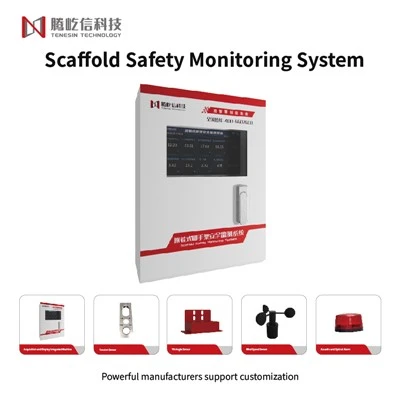
Hey there! If you're running a battery manufacturing plant, then you know all too well about the risks associated with battery acid fumes and hydrogen gas. That's where a top - notch Hazardous Gas Monitoring System comes in. As a supplier of such systems, I'm here to spill the beans on the monitoring requirements for these two pesky gases in your plant.
Let's start with battery acid fumes. Battery acid, usually sulfuric acid in lead - acid batteries, can release harmful fumes. These fumes are not only a nuisance but also pose serious health risks to your workers. Exposure to sulfuric acid fumes can irritate the eyes, nose, and throat, and in severe cases, it can even cause lung damage and other respiratory problems.
From a monitoring perspective, the first requirement is to understand the threshold limit values (TLVs). TLVs are the maximum concentrations of a chemical substance to which most workers can be exposed day after day without adverse health effects. For sulfuric acid fumes, the American Conference of Governmental Industrial Hygienists (ACGIH) has set a TLV - Time Weighted Average (TWA) of 1 mg/m³. This means that, on average, over an 8 - hour workday, the concentration of sulfuric acid fumes in the air should not exceed 1 mg/m³.
Our Hazardous Gas Monitoring System Hazardous Gas Monitoring System is designed to accurately measure these concentrations in real - time. It uses advanced sensors that are highly sensitive to sulfuric acid fumes. The sensors are placed strategically throughout the battery manufacturing plant, especially in areas where the risk of acid fume release is high, such as near battery charging stations and areas where battery acid is stored or handled.
The system also has an alarm function. Once the concentration of battery acid fumes approaches or exceeds the TLV, the system will sound an alarm. This gives workers ample time to take appropriate safety measures, such as donning protective gear or evacuating the area if necessary.
Another important aspect of monitoring battery acid fumes is the need for continuous data logging. Our system continuously records the concentration levels of the fumes over time. This data is valuable for several reasons. Firstly, it can be used to assess the effectiveness of your ventilation systems. If the fume concentrations are consistently high in certain areas, it might indicate that the ventilation in those areas needs improvement. Secondly, the data can be used for regulatory compliance. Many regulatory bodies require battery manufacturing plants to keep records of hazardous gas concentrations.
Now, let's talk about hydrogen gas. Hydrogen gas is flammable and can form explosive mixtures with air. In a battery manufacturing plant, hydrogen gas is often produced during the charging process of lead - acid batteries. Therefore, close monitoring of hydrogen gas is crucial to prevent explosions and fires.
The lower explosive limit (LEL) of hydrogen in air is about 4% by volume. This means that if the concentration of hydrogen gas in the air reaches 4%, the mixture can become explosive if an ignition source is present. A good Hazardous Gas Monitoring System should be able to detect hydrogen gas at concentrations well below the LEL. Our system can detect hydrogen gas at concentrations as low as 1% of the LEL. This provides an early warning for plant operators, allowing them to take preventive action before the situation becomes dangerous.
Similar to the monitoring of battery acid fumes, sensor placement is key when it comes to monitoring hydrogen gas. Hydrogen is lighter than air, so sensors should be installed near the ceiling or in areas where hydrogen gas is likely to accumulate. This includes areas above battery racks and in enclosed spaces where ventilation might be limited.


The Hazardous Gas Monitoring System should also be able to communicate effectively. In addition to local alarms, our system can send alerts to managers' smartphones or other remote devices. This ensures that even if the on - site supervisor is not physically present in the plant, they can still be informed immediately about any potential hydrogen gas hazards.
In a battery manufacturing plant, you may also encounter dust particles along with these hazardous gases. That's where an Online Dust Monitoring System can complement your Hazardous Gas Monitoring System. Dust can not only pose health risks to workers but also interfere with the proper functioning of equipment. Our Online Dust Monitoring System can measure the concentration of dust particles in the air and provide real - time data, helping you maintain a safe and clean working environment.
To ensure the reliability of the monitoring system, it needs to be calibrated regularly. Calibration is the process of adjusting the sensors to ensure that they provide accurate readings. Our team can provide calibration services on a scheduled basis to make sure your system is always in top - notch working condition.
In conclusion, if you're operating a battery manufacturing plant, investing in a high - quality Hazardous Gas Monitoring System is non - negotiable. It's a matter of protecting your workers' health, preventing accidents, and complying with regulations. With our state - of - the - art system, you can have peace of mind knowing that you're getting accurate and reliable monitoring of both battery acid fumes and hydrogen gas.
If you're interested in learning more about our Hazardous Gas Monitoring System or have any questions regarding the monitoring requirements for your battery manufacturing plant, don't hesitate to reach out. We'd love to have a chat and see how we can help you create a safer working environment.
References:
- American Conference of Governmental Industrial Hygienists (ACGIH). Threshold Limit Values for Chemical Substances and Physical Agents and Biological Exposure Indices.