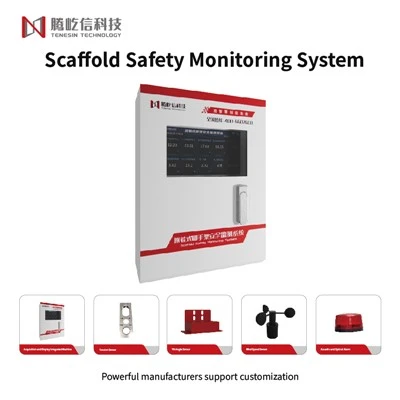
As a supplier of tower crane monitoring systems, I often encounter inquiries from clients in various construction projects. One question that frequently arises is whether our tower crane monitoring system can work effectively in areas with poor signal coverage. In this blog, I will delve into this issue, exploring the challenges and solutions associated with operating our systems in such environments.
The Significance of Tower Crane Monitoring Systems
Tower crane monitoring systems play a crucial role in ensuring the safety and efficiency of construction sites. These systems are designed to collect and analyze data on various aspects of crane operation, such as load weight, boom angle, and wind speed. By providing real - time information to operators and site managers, they help prevent accidents, reduce downtime, and optimize crane performance.


Our company offers a range of advanced tower crane monitoring solutions, including the Luffing Jib Crane Safety Monitoring Hook Visualization System, Tower Crane Safety Monitoring Hook Visualization System, and Tower Crane Operating Assistance Safety System. These systems use state - of - the - art sensors and communication technologies to deliver accurate and reliable data.
Challenges in Poor Signal Coverage Areas
Poor signal coverage can pose significant challenges to the operation of tower crane monitoring systems. Most monitoring systems rely on wireless communication technologies, such as cellular networks, Wi - Fi, or radio frequency (RF) signals, to transmit data from the sensors on the crane to the central monitoring station.
In areas with weak or no signal, data transmission can be interrupted or delayed. This can lead to inaccurate or incomplete information reaching the operators and site managers, which may compromise safety and operational efficiency. For example, if the load weight data is not transmitted in a timely manner, the operator may not be aware of an over - load situation, increasing the risk of a crane collapse.
Solutions for Poor Signal Coverage
Local Data Storage and Off - line Analysis
One solution is to incorporate local data storage capabilities into the monitoring system. Our tower crane monitoring systems are equipped with high - capacity storage devices that can store data collected by the sensors for a certain period. This data can be retrieved later when the signal is restored or when the crane is brought to an area with better signal coverage.
Once the data is retrieved, it can be analyzed off - line using specialized software. This approach ensures that no data is lost during periods of poor signal, and operators can still review and analyze the crane's performance at a later time.
Hybrid Communication Technologies
To mitigate the impact of poor signal coverage, our monitoring systems use hybrid communication technologies. In addition to relying on wireless networks, they can also use alternative communication methods, such as satellite communication or power - line communication.
Satellite communication provides a reliable option for areas where terrestrial networks are unavailable. Although it can be more expensive, it offers global coverage and high - speed data transmission. Power - line communication uses the existing electrical wiring on the construction site to transmit data, eliminating the need for additional wireless infrastructure.
Signal Boosters and Repeaters
Another solution is to use signal boosters and repeaters. Signal boosters can enhance the strength of the existing wireless signal, while repeaters can extend the range of the signal. By strategically placing these devices on the construction site, we can improve the signal quality and ensure more reliable data transmission.
Real - World Applications and Case Studies
We have implemented our tower crane monitoring systems in many construction projects located in areas with poor signal coverage. For example, in a remote mining project, where the construction site was far from any cellular network base stations, our system was able to operate effectively using a combination of local data storage and satellite communication.
The local data storage allowed the system to collect and store data during periods of poor satellite signal, and the satellite communication ensured that the data was transmitted to the central monitoring station as soon as the signal was available. This approach helped the project team to monitor the crane's performance in real - time and make informed decisions to ensure safety and efficiency.
Conclusion
In conclusion, while poor signal coverage can present challenges to the operation of tower crane monitoring systems, there are effective solutions available. Our tower crane monitoring systems are designed to be resilient in the face of these challenges, using a combination of local data storage, hybrid communication technologies, and signal - enhancing devices.
We understand the importance of ensuring the safety and efficiency of construction projects, regardless of the signal conditions. Whether you are working in a remote area or a densely built - up urban environment with signal interference, our monitoring systems can provide you with the reliable data and insights you need.
If you are interested in learning more about our tower crane monitoring systems and how they can work in areas with poor signal coverage, or if you are considering purchasing a system for your construction project, we encourage you to contact us for a detailed consultation. Our team of experts is ready to assist you in choosing the most suitable solution for your specific needs.
References
- [Author's name, if available]. (Year). Title of the research paper on tower crane monitoring systems. Journal name, Volume(Issue), Page numbers.
- [Author's name, if available]. (Year). Book title on construction safety and monitoring. Publisher.