As a supplier of the Deep Foundation Pit Safety Monitoring System, I am often asked about how our system effectively monitors the corrosion of support structures in deep foundation pits. This blog post aims to provide a detailed explanation of the process, highlighting the importance of corrosion monitoring and the advanced techniques employed by our system.
The Significance of Corrosion Monitoring in Deep Foundation Pits
Deep foundation pits are crucial components in large - scale construction projects, such as high - rise buildings and underground structures. The support structures in these pits, including retaining walls, piles, and struts, are constantly exposed to harsh environmental conditions. Soil moisture, groundwater with various chemical compositions, and oxygen can all contribute to the corrosion of these metal or concrete support structures.
Corrosion can significantly weaken the structural integrity of the support system. As the metal corrodes, its cross - sectional area reduces, leading to a decrease in load - bearing capacity. In the case of concrete structures, corrosion of the embedded steel reinforcement can cause cracking and spalling of the concrete, further compromising the overall stability of the foundation pit. Therefore, early detection of corrosion is essential to prevent potential structural failures, which could result in costly repairs, project delays, and even endanger the safety of workers and the public.
Components of Our Deep Foundation Pit Safety Monitoring System for Corrosion
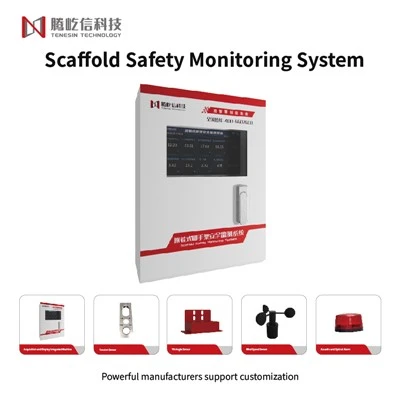
Our Deep Foundation Pit Safety Monitoring System is a comprehensive solution that combines multiple sensors and advanced data analysis techniques to monitor the corrosion of support structures effectively.


1. Corrosion Sensors
- Electrochemical Sensors: These sensors are based on the principle of electrochemical reactions that occur during the corrosion process. By measuring the electrochemical potential and current between the sensor electrodes, we can determine the corrosion rate of the metal support structures. For example, in a steel pile, the electrochemical sensor can detect the oxidation of iron to iron ions, which is an indication of corrosion. These sensors are highly sensitive and can provide real - time data on the corrosion status, allowing for timely intervention.
- Fiber - Optic Sensors: Fiber - optic sensors are another key component of our system. They work by measuring changes in the optical properties of the fiber, such as light intensity and wavelength, which are affected by the expansion or contraction of the surrounding material due to corrosion. These sensors are immune to electromagnetic interference and can be easily installed in hard - to - reach areas of the support structures. They are particularly useful for monitoring the corrosion of concrete structures, as they can detect internal damage before it becomes visible on the surface.
2. Data Acquisition and Transmission
Once the corrosion sensors collect data, it is transmitted to a central data acquisition unit. Our system uses wireless communication technologies, such as ZigBee and GPRS, to ensure reliable and efficient data transfer. The data acquisition unit is responsible for processing and storing the sensor data, as well as performing initial data analysis. It can also be configured to send alerts to the project managers and engineers in case of abnormal corrosion rates or other safety - critical events.
3. Data Analysis and Visualization
The collected data is then sent to our cloud - based data analysis platform. Our team of experts has developed advanced algorithms that can analyze the corrosion data in real - time. These algorithms take into account various factors, such as environmental conditions, material properties, and historical data, to accurately predict the future corrosion behavior of the support structures.
The analysis results are presented in an intuitive and user - friendly dashboard, which allows the project stakeholders to easily visualize the corrosion status of different support structures. The dashboard provides graphs, charts, and maps that show the corrosion rate, location, and severity of the corrosion. This visualization helps the decision - makers to quickly identify potential problems and take appropriate measures to address them.
Monitoring Process
Installation of Sensors
The first step in the corrosion monitoring process is the installation of sensors on the support structures. Our experienced technicians carefully select the installation locations based on the structural design and the expected corrosion risk areas. For example, in a deep foundation pit with a high groundwater level, sensors are installed at the lower parts of the retaining walls and piles, where the corrosion risk is higher.
Continuous Monitoring
Once the sensors are installed, the monitoring process begins. The sensors continuously collect data at regular intervals, typically every few minutes or hours, depending on the project requirements. The data is then transmitted to the data acquisition unit and the cloud - based analysis platform in real - time.
Early Warning and Intervention
Our system is designed to issue early warnings when the corrosion rate exceeds the pre - set safety thresholds. These warnings can be sent via email, SMS, or push notifications to the relevant project personnel. When an early warning is issued, the project team can immediately conduct a detailed inspection of the affected support structures. Based on the inspection results, appropriate measures can be taken, such as applying anti - corrosion coatings, replacing the corroded parts, or adjusting the groundwater level to reduce the corrosion risk.
Comparison with Traditional Monitoring Methods
Compared with traditional corrosion monitoring methods, such as visual inspection and manual sampling, our Deep Foundation Pit Safety Monitoring System offers several advantages.
- Real - Time Monitoring: Traditional methods often rely on periodic inspections, which may miss critical corrosion events that occur between inspections. Our system provides continuous real - time monitoring, allowing for immediate detection of corrosion and timely intervention.
- Accuracy and Precision: The advanced sensors and data analysis techniques used in our system can provide more accurate and precise corrosion data compared to manual sampling methods. This enables more reliable predictions of the future corrosion behavior and better decision - making.
- Non - Destructive Testing: Our fiber - optic sensors and electrochemical sensors are non - destructive, which means they do not damage the support structures during the monitoring process. In contrast, traditional methods may require drilling or cutting of the structures for sampling, which can cause additional damage and reduce the structural integrity.
Integration with Other Monitoring Systems
Our Deep Foundation Pit Safety Monitoring System can be integrated with other safety monitoring systems, such as the High - rise Formwork Safety Monitoring System. This integration allows for a more comprehensive safety management of the construction project. For example, by combining the corrosion data with the formwork deformation data, the project team can better understand the overall structural safety status of the deep foundation pit and the high - rise building.
Conclusion
In conclusion, our Deep Foundation Pit Safety Monitoring System provides a reliable and efficient solution for monitoring the corrosion of support structures in deep foundation pits. By using advanced sensors, data acquisition, and analysis techniques, our system can accurately detect corrosion at an early stage, issue timely warnings, and help the project team take appropriate measures to ensure the safety and stability of the construction project.
If you are involved in a construction project that requires deep foundation pit safety monitoring, we invite you to contact us for more information. Our team of experts is ready to provide you with customized solutions and professional support to meet your specific project needs. Let us work together to ensure the success and safety of your construction projects.
References
- "Corrosion Monitoring in Civil Engineering Structures", Elsevier, 2018
- "Structural Health Monitoring of Deep Foundation Pits", Springer, 2020
- "Advanced Sensors for Corrosion Detection", IEEE Transactions on Instrumentation and Measurement, 2019