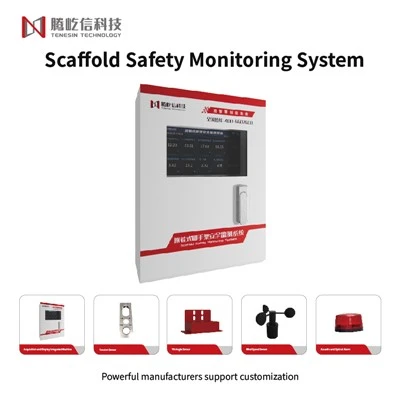
What is the storage capacity of the Form Traveler Safety Monitoring System?


As a supplier of the Form Traveler Safety Monitoring System, I am often asked about the system's storage capacity. This is a crucial aspect, especially for construction projects that require long - term data collection and analysis to ensure the safety of form travelers.
Understanding the Form Traveler Safety Monitoring System
The Form Traveler Safety Monitoring System is designed to continuously track and record various parameters related to the safety of form travelers during construction. These parameters can include load distribution, vibration levels, displacement, and environmental factors such as wind speed and temperature. By monitoring these factors in real - time, potential safety hazards can be identified and addressed promptly, preventing accidents and ensuring the smooth progress of construction projects.
The Form Traveler Safety Monitoring System is an integral part of modern construction safety management. It is similar in concept to the Suspended Platform Safety Monitoring System and Unloading Platform Safety Monitoring System, which also focus on ensuring the safety of different types of construction platforms.
Factors Affecting Storage Capacity
The storage capacity of the Form Traveler Safety Monitoring System is influenced by several factors. Firstly, the number of sensors installed in the system plays a significant role. Each sensor generates a certain amount of data per unit of time. For example, a high - precision load sensor may generate a large amount of data to accurately measure the load distribution on the form traveler. If a form traveler is equipped with multiple sensors for different parameters, the overall data volume will increase significantly.
Secondly, the sampling frequency affects the storage capacity. A higher sampling frequency means that the sensors collect data more frequently. For instance, if the sampling frequency is set to once per second, the system will generate a much larger amount of data compared to a sampling frequency of once per minute. Construction projects with higher safety requirements may opt for a higher sampling frequency to capture more detailed information.
The duration of data storage is another important factor. Some construction projects may only require short - term data storage for a specific construction phase, while others may need to store data for the entire lifespan of the project. Long - term data storage is often necessary for post - project analysis, compliance with safety regulations, and historical reference.
Typical Storage Capacities
In general, the storage capacity of our Form Traveler Safety Monitoring System can range from several gigabytes to terabytes, depending on the configuration. For small - scale construction projects with a limited number of sensors and a relatively low sampling frequency, a storage capacity of a few gigabytes may be sufficient. These systems are usually designed for short - term monitoring and can store data for a few weeks to a couple of months.
For large - scale construction projects with a large number of sensors and a high sampling frequency, a storage capacity of several terabytes may be required. These systems are capable of storing data for several years, allowing for in - depth analysis of long - term trends and patterns. Our system uses high - quality storage devices that are reliable and can withstand the harsh construction environment.
Data Management and Utilization
Once the data is stored in the system, it needs to be managed effectively. Our Form Traveler Safety Monitoring System comes with a user - friendly data management interface that allows users to access, analyze, and export the stored data. The data can be presented in various formats, such as graphs, charts, and reports, making it easy for construction managers, engineers, and safety officers to understand and make informed decisions.
Data analysis is a key part of utilizing the stored data. By analyzing the historical data, potential safety issues can be predicted, and preventive measures can be taken. For example, if the data shows a gradual increase in vibration levels over time, it may indicate a structural problem that needs to be addressed.
Comparison with Other Monitoring Systems
Compared to the Suspended Platform Safety Monitoring System and Unloading Platform Safety Monitoring System, the Form Traveler Safety Monitoring System usually requires a larger storage capacity. This is because form travelers are often more complex structures and are subject to a wider range of forces and environmental factors.
The suspended platform safety monitoring system mainly focuses on parameters such as platform stability and load capacity, while the unloading platform safety monitoring system is more concerned with the safety of the unloading process. Although these systems also generate data, the volume is generally smaller compared to the form traveler safety monitoring system.
Importance of Adequate Storage Capacity
Having adequate storage capacity is crucial for the effectiveness of the Form Traveler Safety Monitoring System. Insufficient storage capacity can lead to data loss, which may result in missed safety warnings and potential accidents. On the other hand, a system with a large enough storage capacity can provide a comprehensive record of the form traveler's performance over time, which is valuable for safety management and quality control.
Contact for Purchase and Consultation
If you are interested in our Form Traveler Safety Monitoring System or have any questions about its storage capacity or other features, we encourage you to contact us for a detailed consultation. Our team of experts is ready to provide you with the most suitable solutions based on your specific construction project requirements. Whether you are working on a small - scale or a large - scale project, we can help you ensure the safety of your form travelers with our reliable monitoring system.
References
- Construction Safety Handbook, 2023 Edition
- Guidelines for Safety Monitoring in Construction Projects, National Construction Safety Association