The scalability of a Mass Concrete Temp Alert System is a critical aspect that directly impacts its effectiveness and adaptability in various construction scenarios. As a supplier of the Mass Concrete Temp Alert System, I have witnessed firsthand how this system's scalability can be a game - changer for construction projects.
Understanding the Mass Concrete Temp Alert System
Before delving into its scalability, it's essential to understand what the Mass Concrete Temp Alert System is. This system is designed to monitor the temperature of mass concrete during the curing process. Mass concrete, which is used in large - scale construction projects such as dams, bridges, and high - rise buildings, generates a significant amount of heat due to the exothermic reaction of cement hydration. If the temperature difference between the interior and the surface of the concrete is too large, it can lead to cracks, compromising the structural integrity of the concrete.
The Mass Concrete Temp Alert System uses a network of sensors placed at different depths and locations within the concrete to measure the temperature. These sensors are connected to a central monitoring unit, which can collect, analyze, and display the temperature data in real - time. When the temperature exceeds a pre - set threshold, the system sends out an alert, allowing construction teams to take appropriate measures to control the temperature, such as adjusting the cooling rate or applying insulation.
Scalability in Terms of Sensor Deployment
One of the primary aspects of scalability for the Mass Concrete Temp Alert System is the ability to deploy a variable number of sensors. In small - scale construction projects, only a few sensors may be required to monitor the temperature of the concrete. For example, in a small foundation slab, a handful of sensors strategically placed can provide sufficient data to ensure the concrete is curing within the desired temperature range.
However, in large - scale projects, such as a massive dam construction, hundreds or even thousands of sensors may be needed. Our Mass Concrete Temp Alert System is highly scalable in this regard. The system can easily accommodate a large number of sensors without any significant degradation in performance. The sensors can be connected to the central monitoring unit using wired or wireless communication protocols, depending on the project requirements. This flexibility allows construction teams to customize the sensor deployment according to the size and complexity of the project.
Scalability in Data Management
As the number of sensors increases, so does the amount of data generated by the Mass Concrete Temp Alert System. Managing this large volume of data is a challenge that requires a scalable data management solution. Our system uses advanced data management techniques to handle the data efficiently.
The central monitoring unit is equipped with powerful data processing capabilities. It can collect, store, and analyze the data from all the sensors in real - time. The system can also generate detailed reports and visualizations, such as temperature profiles and trend analysis, to help construction teams make informed decisions.
In addition, our Mass Concrete Temp Alert System can be integrated with other data management systems used in the construction industry. For example, it can be integrated with the project management software to provide temperature data as part of the overall project monitoring. This integration allows for seamless data flow and better coordination between different aspects of the construction project.
Scalability in Communication and Connectivity
Communication and connectivity are crucial for the proper functioning of the Mass Concrete Temp Alert System. In large construction sites, ensuring reliable communication between the sensors and the central monitoring unit can be challenging. Our system offers multiple communication options to address this issue.
For short - range communication, we offer wired connections, which are stable and reliable. Wired connections are ideal for projects where the sensors are located in close proximity to the central monitoring unit. For long - range communication, we provide wireless options, such as Wi - Fi, ZigBee, or cellular networks. Wireless communication allows for greater flexibility in sensor deployment, especially in large and complex construction sites.
The system can also be configured to support multiple communication channels simultaneously. This redundancy ensures that even if one communication channel fails, the system can still function properly, and the temperature data can be transmitted to the central monitoring unit.
Scalability in System Expansion and Upgrades
The construction industry is constantly evolving, and new technologies and requirements emerge regularly. Our Mass Concrete Temp Alert System is designed to be scalable in terms of system expansion and upgrades.
Over time, construction teams may need to add new features or functionality to the system. For example, they may want to integrate additional sensors, such as humidity sensors or strain gauges, to monitor other parameters of the concrete. Our system can easily accommodate these expansions. The modular design of the system allows for the seamless addition of new components without disrupting the existing functionality.
In addition, as new technologies become available, our system can be upgraded to take advantage of these advancements. For example, we can upgrade the system to use more advanced sensors with higher accuracy or to implement more sophisticated data analysis algorithms. This ensures that the Mass Concrete Temp Alert System remains up - to - date and continues to meet the changing needs of the construction industry.
Comparison with Related Systems
It's also worth comparing the scalability of our Mass Concrete Temp Alert System with other related systems in the construction industry. For example, the Scaffold Safety Monitoring System and the Climbing Formwork Safety Monitoring System also need to be scalable to meet the requirements of different construction projects.
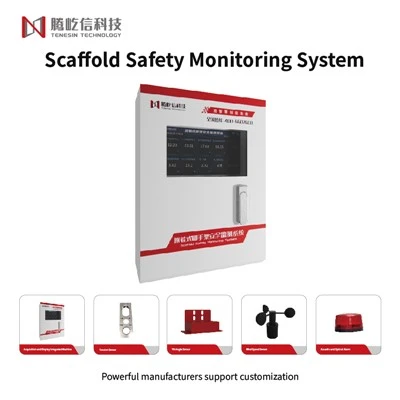
The Scaffold Safety Monitoring System is used to monitor the safety parameters of scaffolds, such as load, tilt, and vibration. Similar to the Mass Concrete Temp Alert System, it needs to be able to accommodate a variable number of sensors depending on the size and complexity of the scaffold. However, the nature of the data and the monitoring requirements are different. The Mass Concrete Temp Alert System focuses on temperature monitoring, while the Scaffold Safety Monitoring System focuses on structural safety parameters.
The Climbing Formwork Safety Monitoring System is used to monitor the safety of climbing formwork during the construction of high - rise buildings. It also requires scalability in terms of sensor deployment and data management. However, the operating environment and the specific challenges faced by the Climbing Formwork Safety Monitoring System are different from those of the Mass Concrete Temp Alert System.
Conclusion and Call to Action
In conclusion, the scalability of the Mass Concrete Temp Alert System is a key feature that makes it suitable for a wide range of construction projects. Whether it's a small - scale foundation or a large - scale dam construction, the system can be customized to meet the specific requirements of the project.


If you are involved in a construction project that requires temperature monitoring of mass concrete, our Mass Concrete Temp Alert System is the ideal solution. Its scalability in sensor deployment, data management, communication, and system expansion ensures that it can adapt to the changing needs of your project. To learn more about our system and discuss your specific requirements, please visit our Mass Concrete Temp Alert System page and get in touch with our sales team. We look forward to working with you to ensure the success of your construction project.
References
- ACI 207.1R - 05, “Guide to Mass Concrete.” American Concrete Institute.
- Neville, A. M., “Properties of Concrete.” Pearson Education.
- Construction Industry Institute, “Best Practices for Concrete Temperature Control in Mass Concrete Structures.”