In the construction industry, tower cranes play a pivotal role in lifting and moving heavy materials at great heights. Ensuring the safety and efficiency of these massive machines is of utmost importance. As a leading supplier of tower crane monitoring systems, I have witnessed firsthand how these systems interact with operators to enhance operational safety and productivity.
The Basics of Tower Crane Monitoring Systems
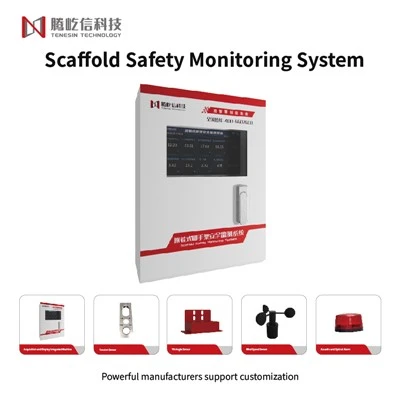
Tower crane monitoring systems are sophisticated technological solutions designed to collect, analyze, and present crucial data about the crane's operation. These systems typically consist of sensors placed at various points on the crane, a central processing unit, and a user interface for the operator. The sensors can measure a wide range of parameters, including load weight, boom angle, jib position, wind speed, and more.
The data collected by the sensors is transmitted to the central processing unit, where it is analyzed in real - time. The system then provides feedback to the operator through the user interface, which can be a display screen inside the crane's cab. This feedback is essential for the operator to make informed decisions during the crane's operation.
Real - Time Data Provision
One of the primary ways a tower crane monitoring system interacts with operators is by providing real - time data. For example, when the crane is lifting a load, the system continuously measures the weight of the load. If the load exceeds the crane's rated capacity, the system will immediately alert the operator. This is crucial because overloading a crane can lead to structural failure, which is extremely dangerous.
In addition to load weight, the system also monitors the boom angle. The boom angle affects the crane's lifting capacity and stability. By providing the operator with the exact boom angle, the system helps the operator determine the safe working range of the crane. For instance, if the boom is at a steep angle, the crane may have a lower lifting capacity compared to when it is at a more horizontal position.
The wind speed is another critical parameter monitored by the system. High winds can significantly affect the stability of a tower crane. The monitoring system measures the wind speed and direction and alerts the operator if the wind conditions are approaching or exceeding the safe operating limits. This allows the operator to take appropriate action, such as stopping the operation or adjusting the crane's position.
Pre - operation Checks
Before starting the crane, the operator can use the monitoring system to perform pre - operation checks. The system can provide a comprehensive overview of the crane's status, including the functionality of all sensors, the integrity of the structural components, and the condition of the electrical and hydraulic systems.
For example, the system can check if all sensors are properly calibrated and functioning. If a sensor is malfunctioning, the system will display an error message, allowing the operator to address the issue before starting the operation. This helps prevent potential accidents caused by faulty sensors.
The monitoring system can also assist in checking the structural integrity of the crane. It can detect any signs of stress or damage to the crane's components, such as cracks in the boom or jib. By identifying these issues early, the operator can arrange for maintenance or repairs, ensuring the safety of the crane and its operation.
Safety Alarms and Warnings
Tower crane monitoring systems are equipped with safety alarms and warnings to alert operators of potential hazards. These alarms can be visual, such as flashing lights on the display screen, or audible, such as beeping sounds.
For example, if the crane is approaching a restricted area, such as another crane or a building, the system will issue an alarm. The operator can then take immediate action to avoid a collision. Similarly, if the system detects an abnormal movement or vibration of the crane, it will trigger an alarm, indicating a possible mechanical problem.
The alarms and warnings are customizable, allowing the operator to set the thresholds according to the specific requirements of the job site. This flexibility ensures that the operator is notified of any potential issues that may affect the safety and efficiency of the crane's operation.
Training and Skill Enhancement
Tower crane monitoring systems also play a role in training new operators and enhancing the skills of experienced ones. For new operators, the system provides a wealth of information about the crane's operation, which can be used as a learning tool. The real - time data and feedback help new operators understand how different parameters affect the crane's performance.
For experienced operators, the system can be used to analyze their performance and identify areas for improvement. For example, the system can record the operator's lifting operations, including the load weight, boom angle, and operating time. By analyzing this data, the operator can learn how to optimize their operations, reduce the risk of accidents, and increase productivity.
Integration with Other Systems
Modern tower crane monitoring systems can be integrated with other systems on the job site, such as building information modeling (BIM) systems and site management software. This integration allows for better coordination and communication between different stakeholders on the job site.
For example, when integrated with a BIM system, the monitoring system can provide real - time information about the crane's position and movement in relation to the building structure. This helps architects, engineers, and construction managers to plan the construction process more effectively.
When integrated with site management software, the monitoring system can share data about the crane's operation, such as the number of lifts, the time taken for each lift, and the usage of fuel or electricity. This information can be used for cost analysis, resource management, and project scheduling.
Case Studies and Success Stories
To illustrate the effectiveness of tower crane monitoring systems, let's look at some case studies. In a large - scale construction project, a tower crane was equipped with our Tower Crane Safety Monitoring System. During the operation, the system detected a gradual increase in the load weight, which was approaching the crane's rated capacity. The system immediately alerted the operator, who stopped the lifting operation and checked the load. It was found that there was an additional weight attached to the load, which was not accounted for. Thanks to the monitoring system, a potential overloading accident was avoided.


In another project, a luffing jib crane was installed with our Luffing Jib Crane Safety Monitoring Hook Visualization System. The system provided the operator with a clear view of the hook and the load, even in low - visibility conditions. This improved the accuracy of the lifting operations and reduced the time taken for each lift, resulting in increased productivity.
Conclusion and Call to Action
In conclusion, tower crane monitoring systems are essential tools for ensuring the safety and efficiency of tower crane operations. By providing real - time data, performing pre - operation checks, issuing safety alarms, and assisting in training and integration, these systems interact closely with operators to enhance their decision - making process.
If you are in the construction industry and are looking for a reliable tower crane monitoring system, we are here to help. Our Tower Crane Safety Monitoring Hook Visualization System and other products are designed to meet the highest standards of safety and performance. Contact us to discuss your specific requirements and explore how our monitoring systems can benefit your projects.
References
- "Tower Crane Safety: Best Practices and Standards," Construction Industry Institute.
- "Advanced Sensor Technologies for Tower Crane Monitoring," Journal of Construction Engineering and Management.
- "Integration of Tower Crane Monitoring Systems with Building Information Modeling," International Journal of Construction Technology.